


Our team is here to help. Reach out to us for more information or assistance.
Ontario is facing an unprecedented housing affordability crisis. With population growth outpacing housing supply, home prices and rents have soared beyond the reach of many families, first-time buyers, and young professionals. Recognizing this emergency, the provincial government introduced sweeping legislative changes designed to accelerate residential development across the province.
Bill 23 – The More Homes Built Faster Act, 2022 represents one of the most significant overhauls to Ontario's planning and zoning framework in decades. Passed in November 2022, this legislation fundamentally altered how municipalities regulate development, how fees are applied, and what types of housing can be built on your property.
Whether you own a single-family home in Toronto, hold investment properties in Ottawa, or are a small developer planning your next multiplex project in Hamilton, Bill 23 Ontario changes directly affect what you can build, how quickly you can build it, and how much it will cost.
Understanding these zoning changes isn't just for policy experts, it's essential for anyone looking to unlock their property's potential through additions, severances, garden suites, or residential intensification. This comprehensive guide breaks down the More Homes Built Faster Act in plain language, explaining exactly how it impacts your development opportunities and why working with an experienced zoning consultant Ontario like Inarch can make all the difference.
Official Name and Legislative Context
Bill 23, officially titled the More Homes Built Faster Act, 2022, is provincial legislation that received Royal Assent on November 28, 2022. The Act amended multiple pieces of existing Ontario legislation, including the Planning Act, Development Charges Act, Conservation Authorities Act, and Ontario Heritage Act.
Purpose and Provincial Housing Targets
The provincial government introduced Bill 23 with an ambitious goal: facilitate the construction of 1.5 million new homes across Ontario by 2031. This target responds to demographic projections showing continued population growth, immigration, and household formation that far exceeds current housing supply.
The legislation aims to:
While Bill 23 passed in late 2022, many provisions took effect on different dates throughout 2023. Municipalities received varying transition periods to update their official plans, zoning bylaws, and development charge structures. Some changes were immediate, while others required municipal implementation over 12-24 months.
This staggered implementation created and continues to create complexity for property owners and developers navigating the evolving regulatory landscape. Different municipalities have responded to Bill 23 with varying degrees of cooperation, resistance, and creative interpretation.
Development Charge Reductions and Exemptions
One of the most financially significant aspects of Bill 23 Ontario is the dramatic reduction in development charges (DCs) for certain housing types. Development charges are fees municipalities collect from developers to pay for infrastructure like roads, sewers, parks, and community facilities needed to support new development.
Key changes include:
Bill 23 reduced municipalities' ability to require parkland dedication or cash-in-lieu payments for most residential development. Previously, municipalities could require developers to dedicate up to 5% of land (or 1 hectare per 500 units) for parks.
Under the More Homes Built Faster Act:
This change particularly benefits small-scale residential intensification projects and lot severances, reducing costs and removing negotiation complexities during site plan approval.
While Bill 23 creates financial incentives for affordable housing through DC exemptions, critics note the legislation simultaneously reduces municipal revenues traditionally used to fund affordable housing programs. The relationship between reduced municipal capacity and affordable housing creation remains a subject of ongoing debate.
The legislation defines "affordable" housing based on market thresholds that vary by region, creating opportunities for developers who can deliver projects meeting these criteria while accessing significant cost savings.
Bill 23 restricted municipalities' authority over site plan control for smaller residential projects. Many housing types that previously required detailed site plan approval can now proceed with simpler processes.
Site plan control exemptions now apply to:
The legislation reduced conservation authorities' role in development review, limiting their mandate to natural hazard considerations. Previously, conservation authorities could comment on broader environmental and planning matters, creating additional review layers.
Under Bill 23:
Bill 23 introduced important modifications to the minor variance and consent (severance) appeal process:
For Ontario homeowners, Bill 23 opens significant opportunities to add value, generate income, and create housing on existing properties.
Garden suites Ontario (detached backyard dwellings) are now explicitly permitted and encouraged under provincial policy. Bill 23 mandates municipalities allow garden suites as-of-right in residential zones, subject to reasonable design standards.
Benefits for homeowners:
Most garden suite projects still require building permits and may need minor variance applications for setbacks, height, or lot coverage, but the fundamental principle is now provincially protected.
Bill 23 strongly encourages residential intensification Ontario by making it easier to convert single-family homes into duplexes and triplexes. The legislation requires municipalities to permit up to three units per lot in most residential areas.
This creates opportunities to:
Conversions typically require building permits, potential zoning relief through Committee of Adjustment, and compliance with Ontario Building Code requirements including fire separation and means of egress—areas where a BCIN designer Ontario like Inarch provides essential expertise.
Lot severance Ontario applications become more attractive under Bill 23 due to reduced fees, streamlined processes, and clearer approval pathways. If you own a larger property, severing it into two or more lots can unlock substantial value.
Bill 23 impacts severances through:
However, severances still require detailed planning analysis, survey work, zoning compliance verification, and often minor variance applications—services Inarch routinely provides for clients across Ontario.
While not the primary focus of Bill 23, homeowners undertaking additions benefit from clarified rules around site plan control exemptions and streamlined processes for projects that increase residential unit counts.
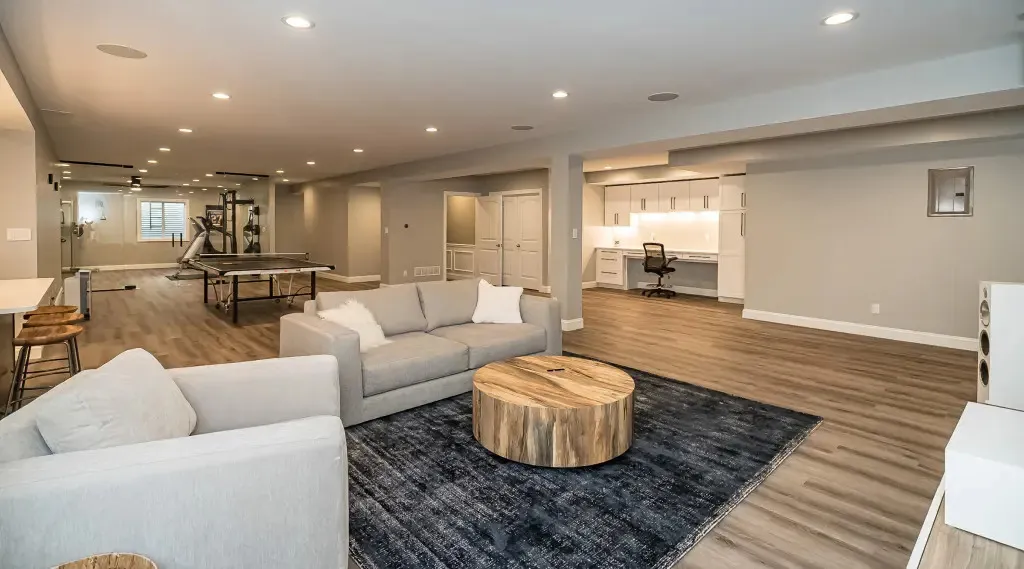
Creating basement apartments or converting portions of your home into additional dwelling units receives strong support under Bill 23. With development charge exemptions and protected provincial policy status, homeowners can more affordably create legal rental units.
Key considerations:
Small to medium developers and real estate investors gain significant advantages under the More Homes Built Faster Act.
Multiplex Projects
Developing fourplexes, sixplexes, or larger multiplex buildings becomes more financially viable due to:
These savings directly improve project feasibility and return on investment.
Small Subdivisions
For developers planning small subdivisions (10-30 lots), Bill 23 reduces costs and timelines significantly. The combination of reduced DCs, parkland dedication changes, and streamlined approvals can save hundreds of thousands of dollars on a typical subdivision.
Urban Intensification
Residential intensification Ontario projects—building more units on existing urban land—receive particular support under Bill 23. Infill projects, laneway housing, and redevelopment of underutilized sites all benefit from the regulatory and financial changes.
Investors purchasing older homes on large lots for redevelopment into multiplexes or multiple townhomes find significantly improved economics post-Bill 23.
Timeline Improvements
Beyond cost savings, Bill 23 creates timeline improvements through:
In development, time is money. Reducing approval timelines from 18 months to 12 months (or 12 months to 6 months) dramatically improves project returns and reduces carrying costs.
Cost Savings Summary
A typical small development project (6-unit multiplex) might save:
These are not trivial amounts, they can make the difference between a project proceeding or being shelved.
Bill 23 Ontario did not exist in a vacuum, and the landscape continues evolving.
Subsequent Provincial Adjustments
Since Bill 23's passage, the province has issued clarifying regulations, policy statements, and amendments. Some provisions were adjusted based on municipal feedback, while others were strengthened to ensure compliance.
Provincial housing targets have been reassessed, with some municipalities receiving revised targets based on capacity analysis and infrastructure constraints.
Municipal responses to Bill 23 have varied dramatically:
This municipal variation means identical projects might face very different processes in Toronto versus Ottawa versus London versus Barrie.
Despite Bill 23's passage, uncertainty remains regarding:
This evolving, municipality-specific landscape makes professional zoning consultant Ontario expertise essential. What Bill 23 theoretically permits may face practical implementation challenges in specific municipalities. Understanding local interpretation, having relationships with municipal planners, and knowing how to structure applications for success requires specialized knowledge.
Inarch stays current on Bill 23 implementation across Ontario municipalities, ensuring clients benefit from the legislation's opportunities while avoiding pitfalls created by unclear or contested interpretations.
The More Homes Built Faster Act makes numerous project types more attractive:
Each project type has specific requirements, and success depends on property characteristics, municipal zoning, site conditions, and proper application preparation.
"Everything Is Automatically Permitted Now"
Reality: Bill 23 establishes provincial policy direction and mandates municipalities allow certain housing types, but it doesn't eliminate zoning or building permit requirements. Projects still need approvals—the process is simply more supportive and streamlined.
Garden suites, additional units, and multiplexes are permitted in principle, but specific applications must still demonstrate compliance with setbacks, height limits, lot coverage, parking, and building code requirements.
"No Approvals Required"
Reality: Building permits are always required for construction. Many projects need Committee of Adjustment applications for minor variances. Some require site plan approval. Severances still go through the consent process.
Bill 23 reduces unnecessary approval layers and costs, but legitimate planning and building safety reviews remain.
"Cities Lost All Control"
Reality: Municipalities retain substantial authority over design standards, built form, heritage conservation, and neighbourhood character. They can still establish reasonable requirements for setbacks, landscaping, parking, and architectural compatibility.
Bill 23 limits municipalities' ability to prohibit certain housing types or impose unreasonable barriers, but it doesn't eliminate local planning control.
"Bill 23 Only Helps Big Developers"
Reality: While large developers benefit, Bill 23's most significant impacts support small property owners, homeowners adding garden suites, investors building small multiplexes, and community-scale projects. Development charge exemptions and streamlined processes particularly benefit smaller projects that previously couldn't absorb high approval costs.
How Inarch Helps Navigate Bill 23 and Ontario Zoning Changes
As an experienced zoning consultant Ontario and BCIN designer Ontario, Inarch provides comprehensive services to help homeowners, investors, and developers capitalize on Bill 23 opportunities:
Before purchasing property or committing to a project, Inarch conducts detailed zoning analysis to determine:
What Bill 23 enables on your specific property
What approvals are required (minor variance, severance, site plan)
This upfront analysis prevents costly mistakes and identifies opportunities others might miss.
When your project requires relief from zoning requirements (setbacks, height, lot coverage, parking), Inarch prepares comprehensive minor variance Ontario applications including:
Detailed planning justification addressing Committee of Adjustment tests
Inarch's expertise significantly increases approval success rates.
As qualified BCIN designers, Inarch prepares building permit drawings for:
Our drawings meet Ontario Building Code requirements and municipal standards, facilitating smooth permit approval.
For small to medium developers and investors, Inarch provides:
Inarch serves clients across Ontario, with deep expertise in how different municipalities implement Bill 23 and Ontario housing legislation. Whether your project is in the GTA, Ottawa, Southwest Ontario, or smaller communities, we understand local planning contexts and regulatory environments.
Bill 23 – The More Homes Built Faster Act represents a historic shift in Ontario's approach to housing and development. For property owners, investors, and developers, it creates genuine opportunities to build more housing, generate income, and maximize property value in ways that were previously uneconomical or impossible.
However, navigating the complex intersection of provincial policy, municipal implementation, zoning regulations, and building code requirements requires specialized expertise. The difference between a successful project and a costly mistake often comes down to proper planning, thorough analysis, and professional application preparation.
Whether you're a homeowner considering a garden suite, an investor evaluating triplex conversions, or a developer planning residential intensification, understanding how Bill 23 applies to your specific property and municipality is essential.
Inarch brings the technical knowledge, municipal experience, and practical expertise to help you capitalize on Bill 23 opportunities while avoiding pitfalls. As a professional BCIN designer Ontario and zoning consultant Ontario, we transform complex regulations into actionable development strategies.
Ready to Explore What Bill 23 Means for Your Property?
Contact Inarch today for a comprehensive zoning review and feasibility consultation. We serve homeowners, investors, and developers across Ontario, providing expert guidance on:
Visit www.inarch.ca to learn more about our services and start your project with confidence.
Let Inarch's expertise in Ontario zoning changes and residential intensification Ontario help you unlock your property's full potential under the More Homes Built Faster Act.
Bill 23, officially the More Homes Built Faster Act, 2022, is Ontario provincial legislation that passed in November 2022. It amended multiple planning and development laws to reduce costs, streamline approvals, and encourage residential construction. Most provisions took effect throughout 2023, though some had immediate implementation while others required municipal transition periods. The legislation aims to facilitate construction of 1.5 million homes across Ontario by 2031 through reduced development charges, simplified approval processes, and support for residential intensification.
Bill 23 establishes provincial policy requiring municipalities to permit garden suites in residential areas, but you cannot build automatically without approvals. You still need a building permit, and your project must comply with zoning requirements for setbacks, height, lot coverage, and site design. Many garden suite projects require minor variance applications to address specific property constraints. However, Bill 23 makes garden suites substantially more feasible by exempting them from development charges (potentially saving $20,000–$50,000+) and requiring municipalities to create supportive approval frameworks rather than prohibiting them outright.
Savings vary significantly by municipality and project type, but can be substantial. For a typical sixplex development, you might save $240,000–$480,000 in development charges alone, plus $50,000–$150,000 in parkland dedication fees. Additional savings come from reduced professional fees due to faster approvals and lower carrying costs from shortened timelines. Total savings on a small multiplex project often range from $300,000–$700,000 compared to pre-Bill 23 costs. For homeowners adding a single garden suite or basement apartment, development charge exemptions alone can save $15,000–$50,000 depending on the municipality.
Yes, Committee of Adjustment approval is still required when your project needs relief from zoning bylaw requirements, such as reduced setbacks, increased height, or excess lot coverage. Bill 23 did not eliminate the need for minor variances or severance consents. However, the legislation did streamline Committee of Adjustment processes by reducing third-party appeal rights, shortening processing timelines, and giving committees broader discretion to approve applications that support housing creation. Working with an experienced zoning consultant helps ensure your Committee of Adjustment application is properly prepared and presented for maximum success.
Yes, Bill 23 significantly improves the economics and feasibility of lot severances. Changes include exemptions from parkland dedication requirements for smaller severances, reduced development charges on severed lots used for residential development, and streamlined Committee of Adjustment consent processes with limited appeal opportunities. These changes can save $30,000–$100,000+ on a typical severance while reducing approval timelines. However, severances still require detailed planning analysis, compliance with zoning requirements (often requiring minor variances), survey work, and agency approvals. Professional assistance from a zoning consultant ensures your severance application addresses all technical requirements and municipal concerns.
Bill 23 made significant changes to heritage conservation processes, reducing municipalities' authority to designate properties and limiting appeals against development affecting heritage properties. The legislation shortened timelines for heritage designation decisions and created exemptions for certain alterations to heritage properties. However, designated heritage properties still have special protections, and development affecting heritage buildings requires heritage permit approval. If you own a heritage property or are considering purchasing one for development, specialized heritage planning analysis is essential to understand constraints and opportunities under the revised framework.
Bill 23 is provincial legislation that establishes overarching policy direction and requirements municipalities must follow. Municipal zoning bylaws are local regulations that implement provincial policy while addressing community-specific planning concerns. Bill 23 limits what municipalities can prohibit (such as garden suites or additional dwelling units) and how they can apply fees, but municipalities retain authority over detailed design standards, setbacks, height limits, and approval processes within provincial parameters. This creates variation across Ontario—identical projects may face different requirements in different cities depending on how each municipality has implemented Bill 23 within their local zoning framework.
 05 Nov 2024
 03 Nov 2024
 22 Feb 2025